

Ask a visitor what the driving hazard in the UAE is and they'll say heat. Reasonable answer, wrong one.
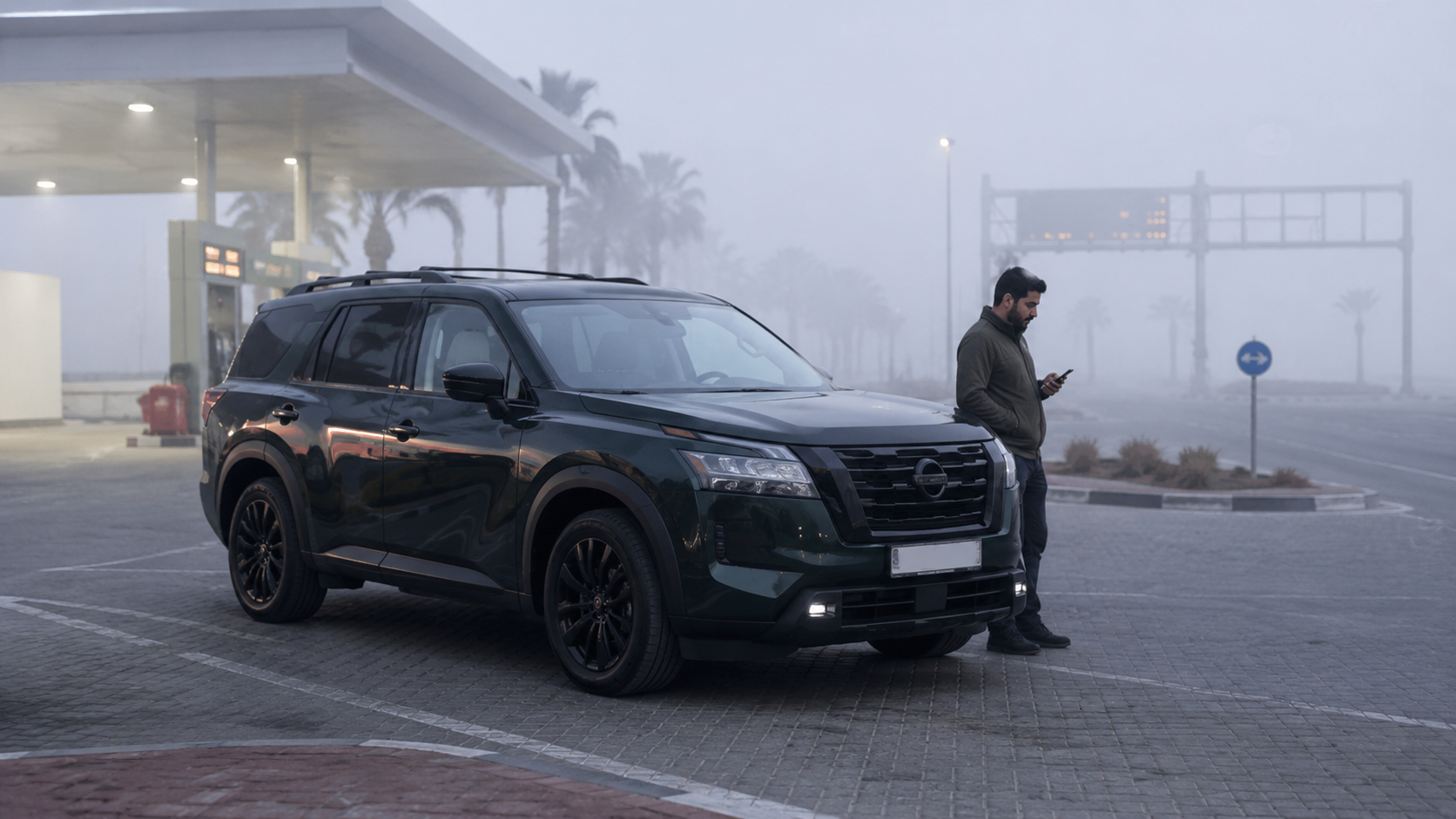
The condition that actually shuts roads, closes the odd runway and produces the multi-car pile-ups that make the news is fog. It arrives before dawn, it can drop visibility to a couple of hundred metres in the space of a kilometre, and it does this on exactly the roads you'll be using – Sheikh Zayed Road, Emirates Road, the run down to Abu Dhabi.
And it isn't a winter-only problem, which is the part that catches people out. This month alone the National Centre of Meteorology has been issuing alerts and police have been dropping motorway limits to 80 km/h because of dense August fog. Humidity at the tail end of summer does it. So does the cool, still air of a January morning.
Why it forms here and why it's so sudden
Warm damp air sitting over cooling desert ground, no wind to stir it, and by four in the morning you have a fog layer that behaves like a thing with intentions. It doesn't blanket the emirate evenly. It sits in patches, often over open ground between interchanges, so you can be in clear air one moment and inside a wall of white a few seconds later at 120 km/h.
It usually burns off between about eight and ten in the morning. Which is precisely when a lot of holiday plans start – the early run to Hatta, the drive to Abu Dhabi to be at the Louvre when it opens, the airport transfer for a 9am flight.
The signs on the gantries beat the signs on the poles
This is the one rule to take away.
When conditions turn, police and the RTA change the limits electronically. Those Variable Message Signs on the overhead gantries override whatever is painted on the roadside – a 120 road becomes an 80 road, and the cameras are set to the new figure, not the old one. Drivers who "know" the road is 120 and keep going get ticketed at a number they thought was fine.
Related, and worth knowing generally: most emirates apply an informal buffer above the posted limit before a camera triggers. Abu Dhabi does not. If your fog-affected drive is the one heading south-west, that difference matters.
Lights: what to switch on, and the mistake almost everyone makes
Low beam headlights. Fog lights if the car has them. That's it.
High beams are counterproductive – the light bounces straight back off the water droplets and you see less than you did before. Every driver tries it once.
Now the big one. Do not drive with your hazard lights on. It feels intuitive, half the traffic around you will be doing it, and it is both illegal and genuinely dangerous. With all four indicators flashing, nobody behind can tell whether you're braking, changing lanes or sitting still – which is the exact information they need when they can't see you. It carries a fine and black points. Hazards are for a vehicle that has stopped, and nothing else.
Driving with no lights at all in fog is its own violation, in the region of AED 500 and four points.
The two things that actually kill people
Stopping on the hard shoulder. If you can't see, the instinct is to pull over and wait it out. Do not do this on a motorway. The shoulder is where a vehicle travelling at speed with a driver who also can't see will end up, and the pile-ups here almost always begin with someone stationary. If you must get off the road, take an exit and find a petrol station or a car park with actual separation from traffic.
Following the tail lights in front. In poor visibility people close up on the car ahead because those two red dots are the only navigation available. It works right up until that car brakes hard for something you cannot see, and now you've spent your entire stopping distance on comfort. Double the gap you'd normally leave. Triple it if you're honest with yourself about your reaction time on an unfamiliar road.
What to do when it's genuinely too thick
Reduce your speed gradually rather than abruptly, sudden braking in fog can turn a two-car collision into a multi-vehicle pileup involving nine vehicles. Turn off the music, crack the window slightly, and listen. Use the road markings on the left as a guide rather than straining to see into the distance. Turn on the defroster before the windshield fogs up, not after.
And accept the delay. Whatever you're driving to will still be there in forty minutes. This is not a philosophical point, it's the practical one, nearly every serious fog crash involves at least one driver who was trying to keep to a schedule.
Dust is the other version of this
Different mechanism, similar outcome. Shamal winds – most common in spring and early summer – lift enough fine sand to cut visibility to something close to fog, with the added detail that it gets into everything.
Two extra rules for dust. Switch the air conditioning to recirculate so you're not pulling grit through the cabin. And don't run the wipers on a dry dusty windscreen – you'll drag the sand across the glass and grind a haze into it that you'll be looking through for the rest of the trip, and that the rental company will notice at handover. Wet it first.
The rental-specific bit
Three things worth having straight before you set off in bad visibility.
Fines follow the number plate, which means they reach the rental company and then reach you. A speeding ticket collected on a fog-reduced 80 zone lands the same way as any other.
If something does happen, damage to the car you're driving comes back to the excess written into your agreement – the deductible, not the full repair. Knowing that figure in advance is what stops a bad morning turning into an argument.
And the least dramatic advice in this whole article, check the forecast the night before an early drive. The NCM issues alerts, they're public, and a yellow warning is a perfectly good reason to leave an hour later rather than an hour earlier.
None of this makes fog a reason to avoid driving here. Ninety-something percent of days it's simply not a factor, and the roads in this country are among the best-built anywhere.
But it's the one condition that turns a routine drive into a genuinely dangerous one without giving you much notice, and it does it at the hour when most people are least awake. Leave the extra time, leave the extra distance, and leave the hazard lights alone.
Our line is open around the clock – if you're out in something ugly and want a second opinion on whether to keep going, call.


