Most road trips our clients take from Dubai point north or east: Hatta, Ras Al Khaimah, the Fujairah coast, Oman. Liwa goes the other way, and it's the one people talk about longest when they bring the car back. Around 350 km south-west of Dubai, a chain of date-palm villages curves along the northern edge of the Rub Al Khali, the Empty Quarter. Behind them, orange dunes roll on towards Saudi Arabia and Oman.
Winter is the season for it. From November to March the days are warm rather than scorching, and in December the area around the country's tallest dune fills up for the Liwa International Festival. It's also a long drive, close to 700 km there and back, so it pays to plan it properly.
The route
The drive itself is simple. Take Sheikh Zayed Road towards Abu Dhabi and keep going on the E11. You don't need to go into Abu Dhabi city: follow the signs for Madinat Zayed and Al Ghuwaifat instead. Past the city, two exits lead to Liwa.
Via Hameem. The first exit. A quieter road that passes Qasr Al Sarab and reaches the eastern end of the oasis at Hameem. Of the two, this is the one with more dunes along the way.
Via Madinat Zayed. The second exit, onto the E45. Madinat Zayed has fuel stations and cafés, and the road brings you into the oasis at Mezaira'a, its main town.
A good plan is to go in on one and come back on the other, so the trip becomes a loop. From Dubai Marina, allow 3.5 to 4 hours each way without long stops, and more if you start in Deira or Sharjah. If you're on the E11 by 6am, you miss the morning traffic around Abu Dhabi and reach Liwa well before midday.
There's one new option this winter. Etihad Rail is due to open a passenger station in Liwa on 30 November 2026. The train will get you to the oasis, but the dune, the forts and the farms are spread far apart with no public transport between them, so you'd still need a car once you arrive.
On the road
Two things change once you cross into Abu Dhabi. The first is speed enforcement. Dubai's cameras usually allow about 20 km/h over the posted limit before they flash. Abu Dhabi scrapped that margin in 2018, so the number on the sign is the real limit, and 1 km/h over it can mean a fine. The fastest stretches of the E11 there are signed at 140 km/h, others lower, and limits on the emirate's roads get revised every year or so. Set the cruise control a few km/h under the last sign you passed and leave it there.
The second is the road itself. After Hameem or Madinat Zayed the traffic thins out to the odd pickup and a lot of trucks. Keep an eye out for these:
Sand on the tarmac. Wind pushes drifts across the road, sometimes several metres wide, often just past a crest or a bend. Slow down before you reach them rather than braking on the sand.
Camels. Al Dhafra is camel country, and the fences don't stop every animal. A camel on the road at night is hard to see in time, which is one more reason to drive this road in daylight.
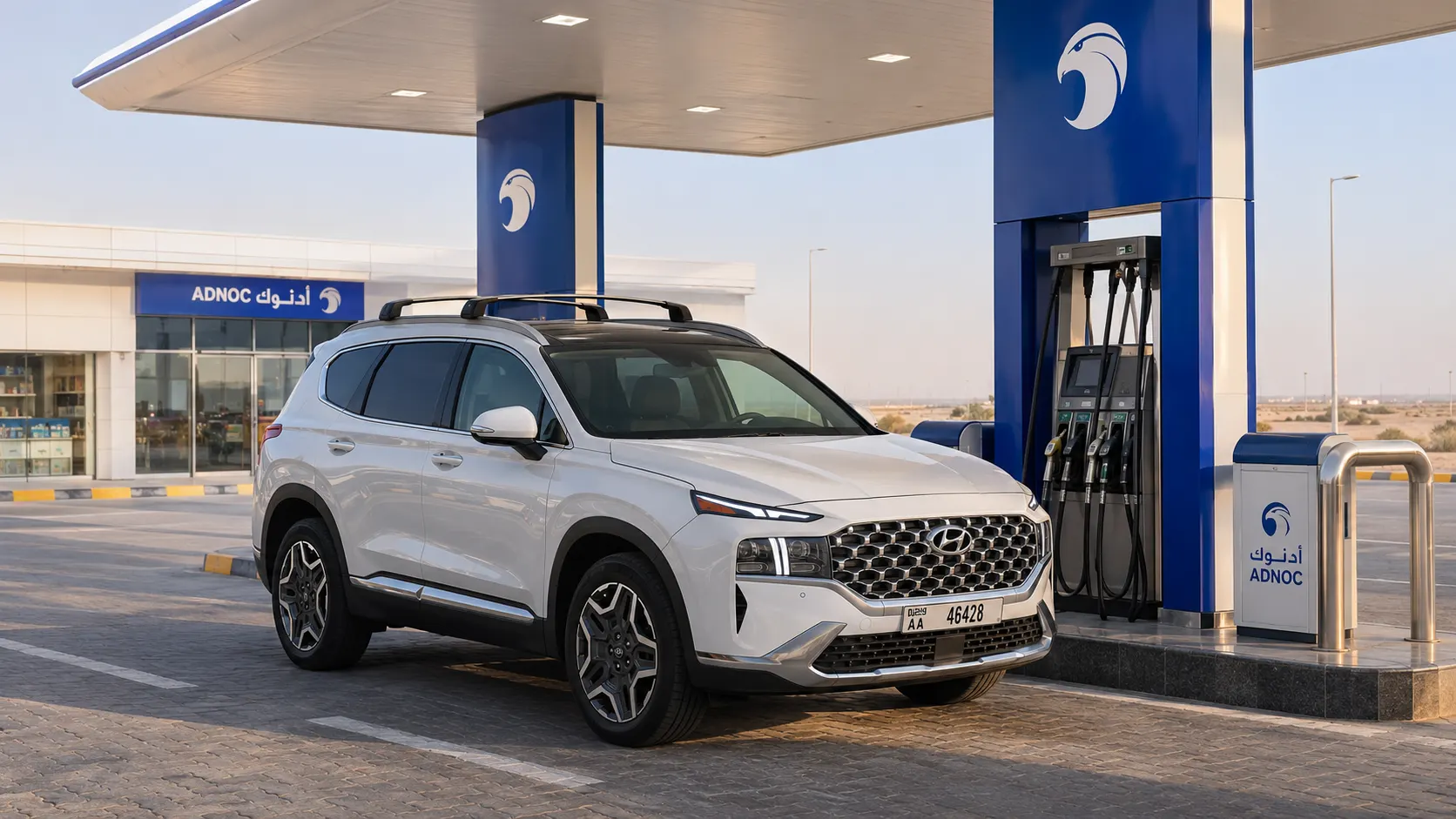
Fuel. There are ADNOC stations in Madinat Zayed and in the Liwa villages, with long empty gaps between. Fill up before you leave the E11, then again in Mezaira'a before you head out to the dune.
Tiredness. The last hour into Liwa is long, straight and very quiet. Stop for a coffee in Madinat Zayed, or swap drivers if you're both on the rental agreement.
Moreeb Dune
Tal Moreeb is the tallest dune in the UAE: more than 300 metres high and about 1.6 km long, with a face as steep as 50 degrees. "Moreeb" means "terrifying" in Arabic, and standing at the bottom you can see where the name came from.
A paved road leads there from Mezaira'a, 15 to 20 minutes away, signposted Moreeb Dune or Tal Mireb. The tarmac ends in a car park at the foot of the slope. You don't need a 4x4 to get this far, and in a rental car the car park is where the drive should stop. Plenty of visitors walk part of the way up. It's much harder than it looks, and most people stop for breath every few dozen steps.
Come early in the morning or in the last two hours before sunset. The low sun picks out every ridge, the sand is cool enough to walk on, and there are fewer people around. On most days you'll see locals in modified 4x4s and buggies trying to drive up the face. Watch them from a safe distance.
This winter the Liwa International Festival runs around the dune from 11 December 2026 to 2 January 2027, with drift shows, drag races and a falcon race, Liwa Village with its food stalls and crafts, and the Tal Moreeb Car Championship to finish, from 30 December. General entry is free, while Liwa Village and some events need tickets. It's the liveliest time to visit and also the busiest, so on weekends and around New Year give yourself an extra hour on the Moreeb road.
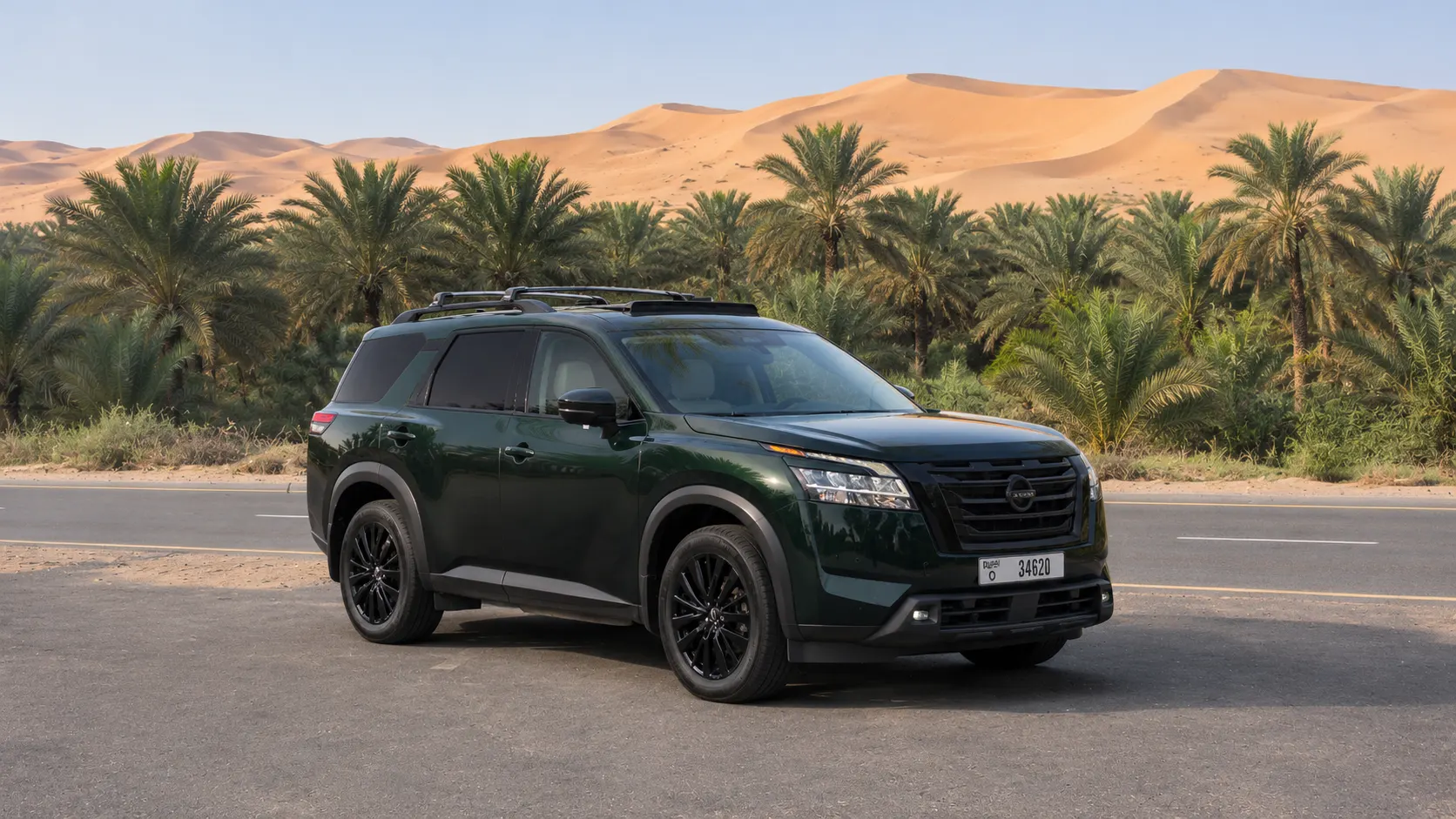
Liwa itself
The oasis isn't one town. It's a long arc of villages, palm groves and farms along the edge of the sand, with Mezaira'a as its main centre. It's also where Abu Dhabi's ruling family comes from: the Al Nahyan lived in Liwa until the 1790s, when they moved their seat to Abu Dhabi island.
With the car, you can piece together a slow afternoon:
Fort Dhafeer, a mud-brick fort from the 19th century, close to 200 years old. There's another restored fort in Mezaira'a itself.
Date farms, many of them around Mezaira'a. Liwa dates have a reputation across the Gulf, and the town holds a date festival every July.
Camel farms, where you'll see the local Liwa breed with its dark, almost black coat.
The palm groves, still watered from springs under the sand.
Most farms are private land. Pull over by the road rather than driving in, and ask before you photograph anyone. If you're in the area before the end of December, the Al Dhafra Festival in Madinat Zayed holds the final rounds of its camel beauty contest, which is worth a detour for the scene alone.
Day trip or overnight
Liwa can be done in a day. You leave at 6am, reach Moreeb before noon and get back to Dubai after dark, with seven or eight hours behind the wheel. It works, but it's tiring, and it puts you on the camel stretch after sunset.
One night changes the trip completely. You get sunset at the dune and sunrise the next morning, and nobody has to drive four hours home in the dark. Places to stay:
Qasr Al Sarab Desert Resort by Anantara, on the Hameem road, built among the dunes and by far the most expensive choice. It's around 60 km from the centre of the oasis, so it works as a destination in its own right.
Liwa Hotel or Western Hotel Liwa in Mezaira'a, simpler and much cheaper, and close to Moreeb.
Liwa Rest House, a government-run guesthouse. Call ahead, as rooms are limited.
A tent. People camp beside the paved Moreeb road without going off-road at all. There are no facilities, so bring water, food and a torch.
During the festival weeks the hotels fill up early, so book as soon as your dates are fixed.
A few notes if you're in a rental car
Kilometres. Liwa and back is about 700 km from Dubai, before you count the driving around the oasis. Most rental agreements include a fixed number of kilometres per day, and a one-day Liwa run can use up two or three days' worth. Check your allowance before you set off, or tell us about the trip when you book.
Stay on tarmac. Standard rental insurance doesn't cover driving on sand, and a car stuck to its axles at the foot of Moreeb makes for an expensive day. If you want the dunes, book a guided 4x4 tour from Liwa; out there even experienced drivers go in convoy. Our article on taking a rental car into the desert explains the rules in detail.
Leave the tyres alone. Letting air out for sand is an off-road trick. On a rental car, keep the pressure on the sticker inside the driver's door.
Mind the wind. Close the windows when it picks up, because blowing sand gets into everything and can scratch glass and paint. Shake the mats out before you head home.
Who drives. Only the people named on the rental agreement can take the wheel. If you plan to share 700 km of driving, add the second driver before you leave.
Before you go
Liwa takes more planning than Al Ain or Hatta, but mostly that means an early start and a full tank. If you'd like a car for the trip, message us on WhatsApp with your dates and route. We'll suggest something comfortable for 700 km of highway and make sure the mileage on your booking covers it.